Using Mulch to Save Water and Improve Soil Health
In Portland and across the surrounding area, more homeowners are looking for practical ways to conserve water, improve soil conditions, and reduce the amount of upkeep their landscape needs throughout the year. One of the simplest ways to support all three goals is with mulch.
Whether you are updating planting beds, improving a newly installed landscape, or building a more drought-conscious yard, mulch plays an important role in long-term landscape health. It helps protect soil, supports plant growth, and gives planting areas a cleaner, more finished appearance. In this guide, we will break down what mulch is, how it helps conserve water, and why it is such an important part of healthy landscaping in the Pacific Northwest.
What Is Mulch?
Mulch is any material spread over the surface of the soil to protect it and improve growing conditions. In residential landscapes, mulch is commonly used in planting beds, around trees and shrubs, and throughout both front yard landscaping and backyard landscaping projects. It helps the soil hold moisture longer, keeps temperatures more stable, reduces weed pressure, and improves the overall performance of the landscape over time.
This is especially important in the Portland area, where landscapes have to handle very different seasonal conditions. Wet winters can compact and erode exposed soil, while dry summers can quickly stress planting beds that do not have enough protection. Mulch acts as a buffer between the soil and the weather, helping plants cope with both extremes more effectively.
There are two primary categories of mulch:
-
- Organic mulch – Includes natural materials such as bark chips, wood mulch, compost, shredded leaves, pine needles, and similar products that gradually break down over time.
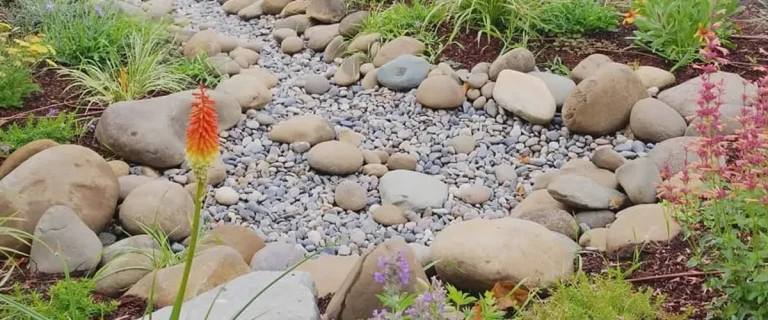
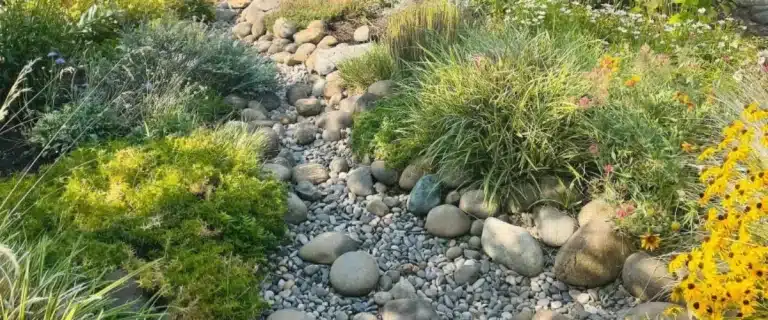
- Inorganic mulch – Includes materials like gravel, crushed stone, and other non-decomposing products often used in low-water landscapes, pathways, or more modern landscape designs.
Inorganic mulch can be useful in the right setting, especially in certain xeriscape or decorative applications. But for overall soil improvement, organic mulch provides much greater value because it gradually feeds the soil as it decomposes.
Why Organic Mulch Is Our Go-To Recommendation
At White Oak Landscapes, we often recommend organic mulch for residential landscapes throughout Portland and nearby communities because it provides both visual and long-term soil benefits.
-
- It gradually breaks down and adds organic matter back into the soil
- It supports healthier microbial activity below the surface
- It helps moderate soil temperatures around roots
- It slows evaporation and reduces how often planting beds need water
- It gives planting beds, trees, shrubs, and pathway edges a cleaner, more finished look
Whether you are refreshing older foundation beds, improving planting around a patio, or reducing lawn space in favor of more sustainable landscaping, mulch is one of the most cost-effective ways to improve both appearance and performance.
How Mulch Helps Conserve Water
Mulch is one of the most effective tools for reducing landscape water use, especially during Portland’s dry summer months when unprotected soil loses moisture quickly. Once the sun hits bare soil, evaporation increases and plant roots dry out faster than many homeowners realize.
-
- Reduces evaporation by shielding the soil from direct sunlight and wind exposure
- Keeps soil cooler, helping plant roots stay more stable during hot weather
- Improves water absorption by slowing runoff during rainfall or irrigation
- Reduces weed competition, so valuable soil moisture is used by your plants instead of unwanted growth
In properly mulched planting beds, homeowners often find they do not need to water as often as they did before. That makes mulch an important part of any low-water landscape plan, especially when combined with smart irrigation improvements and more drought-tolerant plant choices.
How Mulch Improves Soil Health
Water conservation is only part of the story. Mulch also helps build stronger, healthier soil over time, which is one of the main reasons it is so valuable in long-term landscape care.
-
- Supports beneficial soil life as organic mulch breaks down and feeds microbes
- Increases organic matter, improving soil texture and fertility
- Helps reduce compaction by buffering the soil from rain impact and light foot traffic
- Balances soil temperature, which helps reduce plant stress during both hot and cold weather
Healthy soil supports stronger roots, better drainage, and more resilient plants. That is why mulch is often paired with planting work, soil preparation, and broader landscape installation projects. It is one of the simplest ways to support better long-term performance without adding complexity to the yard.
Types of Mulch We Recommend
The best mulch choice depends on your property, the type of plants being installed, the look you want, and how much long-term soil improvement matters in that area. Some mulch materials are better for ornamental beds, while others work well around trees, along pathways, or in water-wise planting zones.
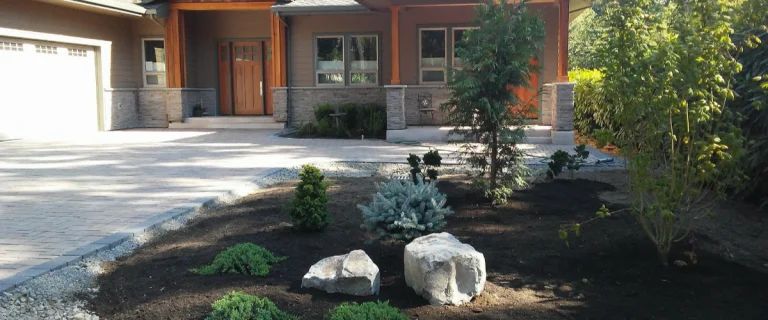
Bark Mulch
-
-
- Typically made from shredded or chipped bark, often fir-based in the Pacific Northwest
- Breaks down slowly, making it a strong option for weed suppression and moisture retention
- Works well in ornamental planting beds and around shrubs and trees
-
Wood Chips
-
-
- Generally coarser in texture than bark mulch
- Helpful for moisture retention around trees, shrubs, and less formal planting areas
- Can also work well in certain natural-style pathways or utility spaces
-
Compost Mulch
-
-
- Rich in nutrients and helpful where soil improvement is a top priority
- Commonly used in flower beds, edible gardens, and beds that need a boost in fertility
- Usually applied more carefully and in thinner layers than coarser mulches
-
Gravel or Decorative Stone
-
-
- Useful in some dry landscape designs and low-maintenance planting areas
- Can be a good fit near succulents, architectural planting, or select drainage applications
- Does not improve the soil the way organic mulch does
-
At White Oak Landscapes, we help homeowners choose the right mulch based on the setting, the plants involved, and the long-term goals for the property. In some cases, that may mean bark mulch in foundation beds and decorative stone in select accent areas, all tied together with thoughtful design.
When and How to Mulch
We often recommend mulch installation in spring or fall, when planting beds are being refreshed and landscapes are preparing for seasonal change. Proper application matters just as much as the material itself.
-
- Apply mulch about 2–4 inches deep in most planting beds
- Keep mulch pulled back slightly from trunks, stems, and plant crowns
- Refresh mulch every year or two, depending on material breakdown and appearance
Too little mulch will not provide enough benefit, while too much can trap moisture against plants and cause problems. Professional installation helps ensure the depth, coverage, and finish are handled correctly, especially in larger beds or more detailed landscape designs.
Mini Case Study: Mulching for Drought Resilience in Oregon City
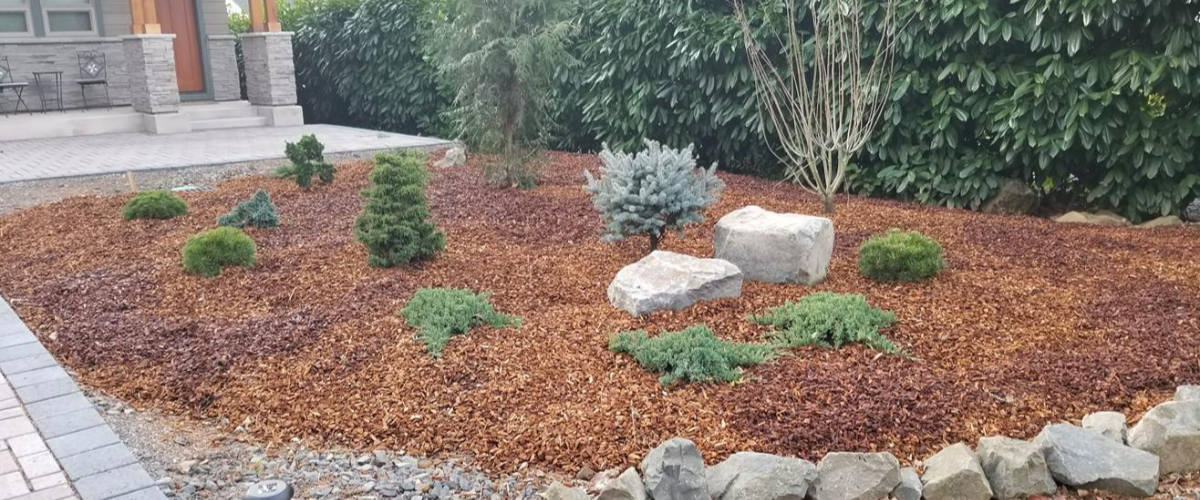
A homeowner in Oregon City had ornamental planting beds that dried out quickly in summer and became overrun with weeds by midseason. We cleared the beds, improved the soil, and installed a fresh layer of dark bark mulch to help retain moisture and regulate soil temperature. By the end of the season, the planting beds were noticeably cleaner, healthier, and easier to manage, and the homeowner was watering less frequently than before.
Proudly Serving Portland and Surrounding Areas
White Oak Landscapes provides mulch delivery and professional installation as part of our full-service landscape solutions. We serve homeowners in:
-
- Portland
- Oregon City
- Lake Oswego
- West Linn
- Tualatin
- Milwaukie
- Damascus
- Surrounding communities throughout Clackamas County
Ready to Improve Your Landscape With Mulch?
Protect your soil, reduce watering demands, and give your planting beds a cleaner, healthier finish. At White Oak Landscapes, we provide high-quality mulch installation that supports the long-term health and appearance of your yard.
Call now or request an estimate to get started. We proudly serve Portland, Oregon City, Lake Oswego, West Linn, Tualatin, Milwaukie, Damascus, and nearby areas with professional landscaping services designed for the Pacific Northwest.