Drainage Solutions to Prevent a Soggy Lawn
If your lawn stays muddy long after the rain stops, the problem is usually bigger than the grass itself. Across Oregon City and the surrounding area, many homeowners deal with standing water, soft spots, and waterlogged turf that makes the yard unpleasant to use and difficult to maintain. Left alone, poor drainage can weaken your lawn, damage planting beds, create erosion, and interfere with patios, walkways, and other landscape features. The good news is that these problems can usually be corrected with the right combination of grading, drainage, and landscape improvements. At White Oak Landscapes, we help homeowners solve wet yard problems with practical, long-term solutions designed for Pacific Northwest conditions.
Why is your lawn always soggy?
If your yard feels saturated every time it rains, there is usually an underlying drainage issue causing water to collect faster than the soil can absorb or redirect it. In many Oregon City, West Linn, and nearby properties, soggy lawns are caused by a combination of grading issues, dense soil, runoff, and missing drainage infrastructure. Until the root cause is identified, surface-level fixes rarely last.
Here are some of the most common reasons lawns in Oregon City, West Linn, and surrounding areas struggle with excess moisture:
-
- Compacted soil: When soil becomes dense from traffic, equipment, or years of poor lawn conditions, water cannot soak in properly. Instead, it sits near the surface and turns the lawn soft and muddy. In some cases, restoring the area may involve soil improvement, regrading, and even lawn restoration work after drainage is corrected.
- Poor grading: If the yard does not slope correctly, water naturally settles in the lowest areas. This often happens near foundations, patios, or flat lawn sections that were never properly shaped to move water away.
- Heavy clay soil: Many properties in Clackamas County have clay-heavy soils that drain very slowly. These yards often need a combination of French drains, regrading, and soil conditioning to keep water from lingering at the surface.
- Blocked or missing drainage paths: Without downspout extensions, catch basins, swales, or other drainage routes, water has nowhere to go. That causes runoff to collect in lawn areas and around beds, walkways, and structures.
- Excess runoff from hardscapes: Patios, driveways, walkways, and other hard surfaces shed water quickly. If those features are not designed with drainage in mind, nearby turf and planting areas often end up taking the overflow. This is especially important when planning a paver patio, walkway, or broader hardscape project.
At White Oak Landscapes, we do not treat drainage as a one-size-fits-all issue. Every property has different grade changes, soil conditions, existing hardscape, and planting needs. That is why we start with a detailed site evaluation and then recommend the right mix of solutions, whether that includes drainage systems, regrading, planting improvements, mulch installation, or more complete backyard landscaping upgrades.
Effective drainage solutions we recommend
At White Oak Landscapes, we install drainage systems that do more than just move water. The right solution should protect your lawn, preserve your outdoor spaces, and fit naturally into the rest of the landscape. Because properties in Oregon City, West Linn, and nearby communities all present different challenges, we tailor each solution to the layout, slope, soil, and surrounding features.
Here are the most effective drainage solutions we install:
1. French drains
French drains are one of the most dependable ways to move excess water away from problem areas. These systems use perforated pipe and gravel below grade to collect groundwater and redirect it toward a safer outlet point.
They’re ideal for:
-
-
- Lawns that remain wet long after storms pass
- Areas with persistent standing water near patios, foundations, or walkways
- Redirecting runoff coming from slopes or higher parts of the property
-
Because many local yards have slow-draining soil, French drains are often combined with grading adjustments, dry creek beds, or other landscape changes to improve overall performance and keep the area usable year-round.
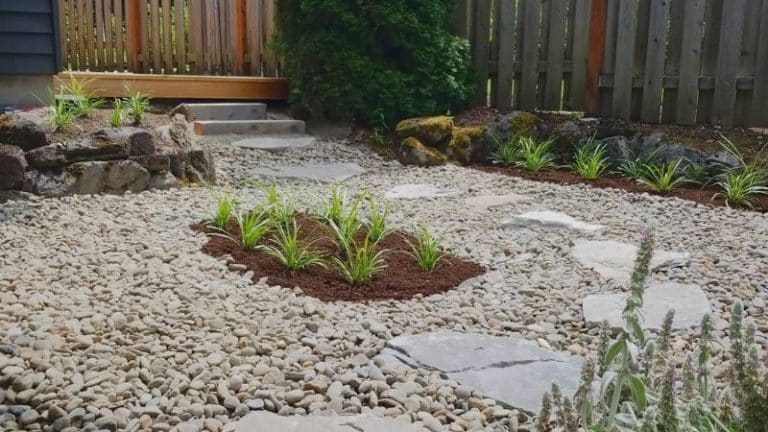
2. Dry creek beds
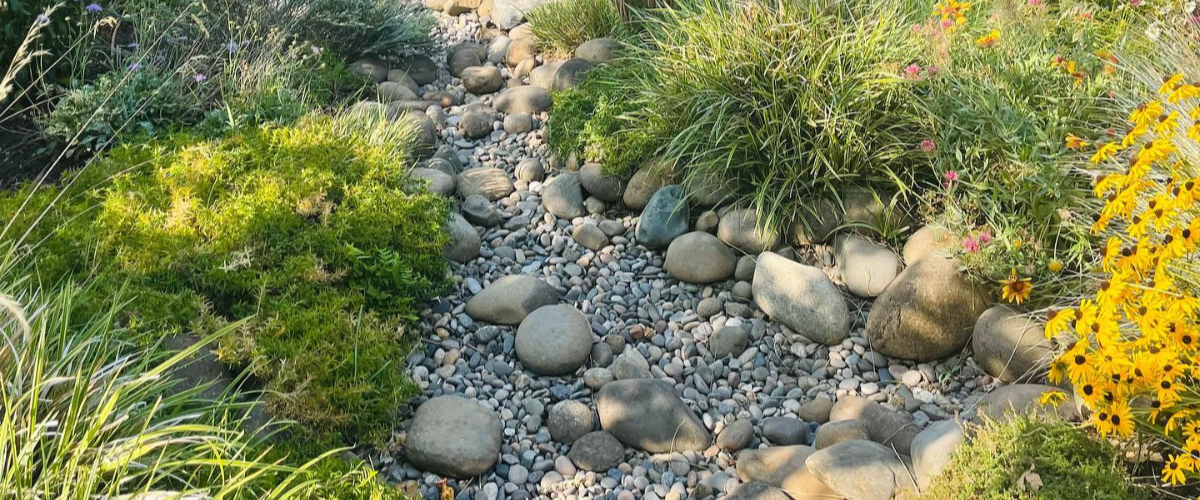
Dry creek beds are a popular option when homeowners want drainage that also looks intentional and attractive. During heavy rain, they guide runoff through the landscape. During dry weather, they function as a decorative feature that adds texture and structure to the yard.
Best uses for dry creek beds include:
-
-
- Carrying water away from downspouts or natural low spots
- Reducing erosion on sloped properties
- Adding visual interest with natural stone and shaped landscape contours
-
We often integrate dry creek beds into larger landscape design projects, pairing them with shrubs and plantings, mulch, edging, and other materials so they feel like part of the landscape rather than a utility feature.
3. Downspout extensions and catch basins
Roof runoff is one of the biggest contributors to lawn saturation and foundation-area drainage problems. If water is dumping directly near the house or into soft lawn areas, the yard can stay soggy even when the rest of the property starts to dry out.
Benefits include:
-
-
- Reducing water buildup near the home and foundation
- Helping keep lawn and planting beds from becoming oversaturated
- Supporting larger drainage systems such as French drains and swales
-
These upgrades are especially important around outdoor living areas, retaining walls, and walkways, where poor drainage can damage both the lawn and the hardscape around it.
4. Grading and soil reconditioning
Sometimes the most important fix is changing the shape of the yard itself. If the lawn has sunken areas, poor pitch, or a shape that traps water, no drain system will perform as well as it should without correcting the grade.
In addition, we often:
-
-
- Loosen compacted soil so water can move through it more effectively
- Incorporate compost or other soil amendments to improve structure
- Prepare the area for lawn repair, reseeding, or new turf installation after the drainage problem is fixed
-
Correct grading also helps nearby paver patios, walkways, and front yard planting beds perform better by reducing erosion and preventing water from collecting where it should not.
5. Drainage swales
A drainage swale is a shallow, shaped channel that guides surface water across the property in a controlled way. Swales are often a good solution when underground piping is not the best fit or when homeowners want a drainage feature that works more naturally with the land.
Swales are an excellent option for:
-
-
- Long, open lawns that collect sheet runoff
- Yards where underground drainage is difficult or unnecessary
- Creating a lower-maintenance solution that blends into the landscape
-
Many homeowners choose to combine swales with broader landscape renovation work or planting projects so the finished yard looks intentional, attractive, and easier to manage in wet weather.
Case example: Oregon City backyard fixed with French drain + regrading
A homeowner in Oregon City contacted us after dealing with standing water in the backyard every spring. The lawn stayed muddy for days after rain, parts of the yard were difficult to use, and nearby garden beds were getting washed out. We installed a French drain system, extended the roof runoff away from the wettest section, and regraded the lawn to improve surface drainage.
After the work was completed, water no longer sat in the middle of the yard after every storm, and the homeowners were finally able to use the backyard without constant mud and soggy footing.
Why professional drainage design matters
Quick fixes rarely solve persistent drainage problems for long. Adding a little soil, digging a shallow trench by hand, or trying random drainage products usually does not address the real cause of the issue. Effective drainage design requires looking at how water moves across the whole property and how that water interacts with soil, slopes, structures, and hardscape.
-
- Soil composition and how quickly it absorbs water
- Yard slope, elevation changes, and low points
- Nearby foundations, patios, walkways, and retaining features
- How the drainage solution will affect the appearance of the property
At White Oak Landscapes, we design drainage solutions that solve the problem while still supporting the look and function of the rest of the landscape.
Proudly serving Oregon City and surrounding areas
We provide drainage solutions and complete landscape design services in:
-
- Oregon City
- West Linn
- Lake Oswego
- Happy Valley
- Clackamas
- Milwaukie
- Tualatin
- Wilsonville
- Canby
- Gladstone
- Beavercreek
- Estacada
- Damascus
Get a dry, usable lawn—starting today
Stop letting standing water, mud, and soggy grass limit how you use your yard.
Let’s solve the real cause of the problem with a drainage plan built specifically for your property. Contact White Oak Landscapes today to schedule a consultation or request an estimate.
We serve Oregon City and surrounding areas with expert landscaping services including grading, French drain installation, erosion control, drainage improvements, and complete outdoor transformations.