Why You Should Add Fresh Mulch to Your Landscape & Garden Beds
Mulch plays a crucial role in maintaining healthy planting beds and improving the overall appearance of your landscape. In Oregon City, where frequent rain and changing seasonal conditions affect soil moisture and plant health, the right mulch installation can make a significant difference in how well your landscape performs.
At White Oak Landscapes, we help homeowners install and maintain mulch beds that protect soil, reduce weeds, and create a clean, finished look throughout the yard. If you are planning to refresh your planting beds or improve soil health, understanding how mulch works is the first step.
Why mulch is important for your landscape
Mulch refers to any material applied to the soil surface to create a protective layer. In nature, this process happens automatically as leaves, plant debris, and organic material settle and decompose on the ground. In residential landscapes, applying mulch recreates these natural benefits while improving the visual appearance of garden beds.
In Oregon City landscapes, mulch is especially valuable because it helps manage moisture and protects plant roots during both wet winters and warm summer periods.
Common benefits of mulch:
-
- Improves soil health
Organic mulch gradually breaks down and enriches the soil with nutrients. - Retains moisture
Mulch reduces evaporation, helping soil stay moist for longer periods. - Reduces weeds
A properly installed mulch layer blocks sunlight from reaching weed seeds. - Regulates soil temperature
Mulch keeps soil cooler during hot weather and helps protect roots during colder nights. - Prevents erosion
Mulch protects soil from heavy rain and runoff. - Enhances landscape appearance
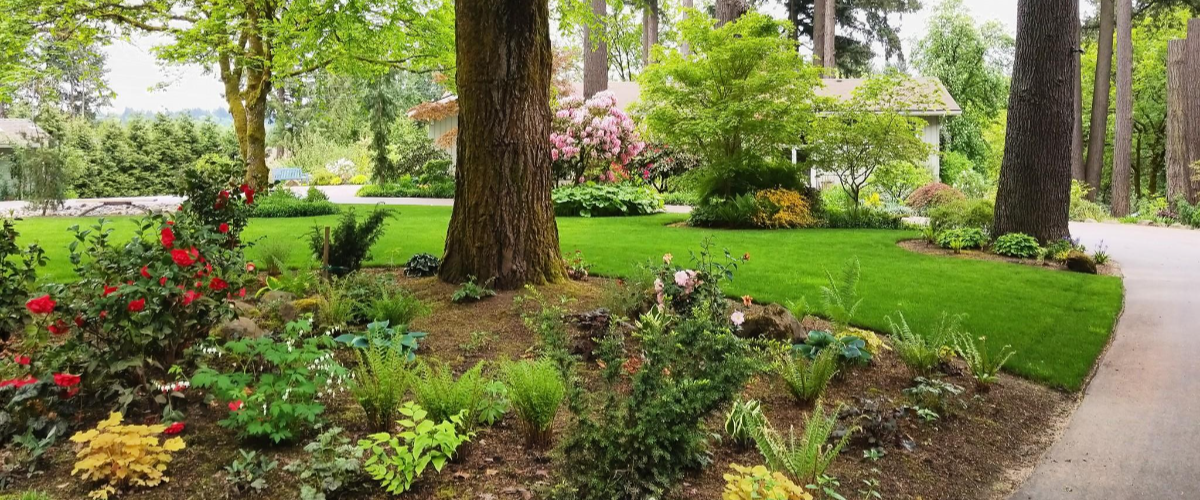
Fresh mulch adds color, contrast, and a polished finish to planting beds.
- Improves soil health
Because of these benefits, mulch installation is often one of the most effective and affordable ways to improve the health and appearance of your landscape.
What a professional mulch installation includes
A successful mulch installation involves more than simply spreading wood chips over the soil. Proper preparation and installation help ensure the mulch performs effectively and lasts longer.
Depending on your landscape, a mulch project may include:
-
- Cleaning and preparing planting beds
- Weed removal and soil preparation
- Defining edges for clean bed boundaries
- Installing high-quality organic mulch
- Integrating mulch with surrounding landscaping elements
At White Oak Landscapes, we prepare each bed carefully so the finished result looks clean and performs properly throughout the season.
Our step-by-step mulch installation process
Mulching may seem simple, but the preparation work makes a major difference in how well it performs over time.
1. On-site consultation and bed evaluation
We begin by evaluating your existing planting beds and identifying areas that need improvement.
During this visit, we:
-
-
- Inspect current mulch depth and condition
- Identify weed issues or soil compaction
- Evaluate bed edges and borders
- Review drainage conditions
- Discuss mulch color and material preferences
-
This helps determine the best type of mulch and the preparation needed before installation.
2. Bed preparation and cleanup
Preparation is one of the most important steps in the mulching process.
-
- Removing debris such as leaves and branches
- Pulling existing weeds from planting beds
- Pruning surrounding shrubs and plants
- Refreshing or defining landscape edging
Proper preparation ensures the mulch sits on clean soil and reduces the chance of weeds returning quickly.
3. Mulch selection and installation
We help you choose the right mulch for your landscape and install it at the correct depth.
-
- Applying mulch evenly across planting beds
- Maintaining recommended depth of approximately 2 to 4 inches
- Keeping mulch away from the base of trees and shrubs
- Smoothing the surface for a uniform appearance
Correct depth is important. Too little mulch will not suppress weeds effectively, while too much can trap moisture and harm plant roots.
4. Final cleanup and walkthrough
After installation, we complete a final inspection of the beds.
-
- Confirming consistent coverage and depth
- Checking plant spacing and soil exposure
- Cleaning surrounding walkways and lawn areas
- Providing guidance on maintaining your mulch beds
We also discuss when mulch should be refreshed depending on the material used.
Types of mulch used in residential landscapes
Mulch generally falls into two main categories: organic materials and inorganic materials. The right option depends on climate conditions, soil needs, and the visual style you prefer for your landscape.
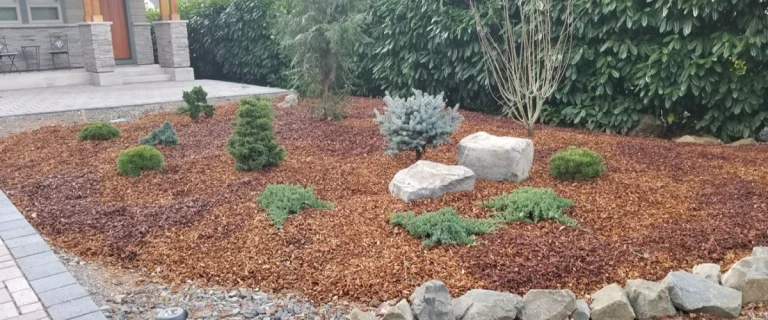
Organic mulches include materials such as shredded bark, wood chips, compost, leaves, and other plant-based products. These materials gradually break down over time and help enrich the soil. They are commonly used in garden beds and around shrubs and trees.
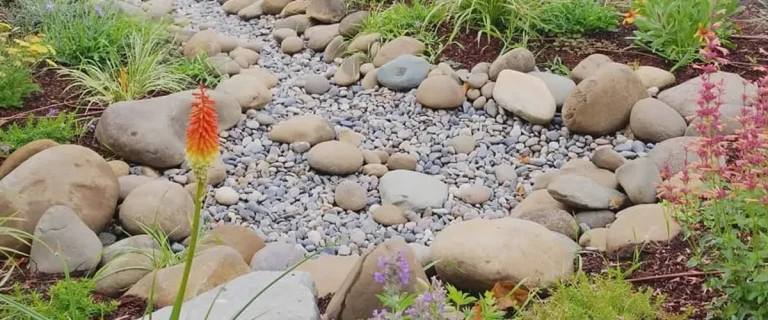
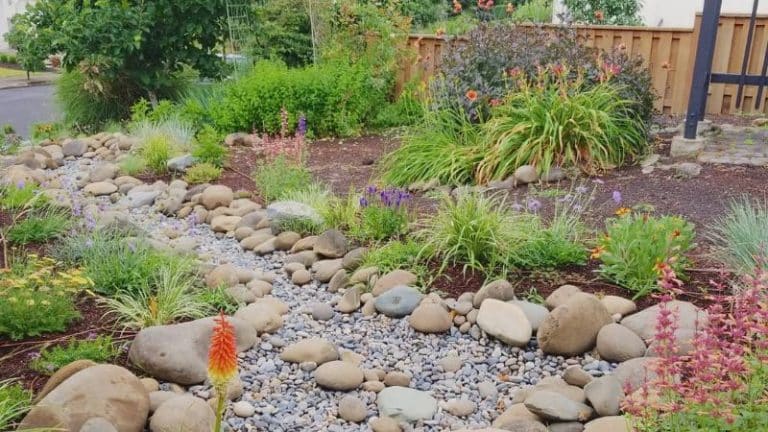
Inorganic mulches include materials such as gravel, decorative stone, rubber mulch, or landscape fabric systems. These materials last longer and may work better in areas where organic materials break down too quickly due to weather exposure.
For many Oregon City properties, organic bark mulch remains the most popular choice because it improves soil while also providing a natural, finished look.
Common mistakes to avoid when mulching
Mulching can improve plant health significantly when done correctly, but improper installation can cause problems.
Common mistakes include:
-
- Applying mulch over weeds or debris
- Using excessive mulch depth
- Piling mulch directly against tree trunks
- Skipping bed preparation and edging
Professional installation helps ensure mulch beds remain healthy and visually appealing for longer periods.
How often should mulch be refreshed?
Most organic mulch materials should be refreshed every one to three years depending on the type of mulch used, weather conditions, and how quickly the material decomposes.
Regular refreshing maintains the protective layer while preserving the clean appearance of your planting beds.
Maintaining healthy mulch beds
Once installed, mulch beds require occasional maintenance to stay effective.
We recommend:
-
- Removing debris that collects on the surface
- Spot-pulling weeds before they spread
- Replenishing mulch when the layer becomes thin
- Monitoring drainage during heavy rain
Our landscape maintenance services help homeowners maintain clean, healthy planting beds throughout the year.
Proudly serving Oregon City and surrounding communities
White Oak Landscapes provides professional mulch installation and landscape bed improvements in:
-
- Oregon City
- West Linn
- Lake Oswego
- Tualatin
- Milwaukie
- Damascus
- Happy Valley
- Clackamas
- Canby
- Beavercreek
We understand the soil conditions and rainfall patterns of the Pacific Northwest and install mulch beds designed to perform well throughout the seasons.
Ready to refresh your landscape beds?
Improve soil health and enhance the appearance of your landscape with professional mulch installation.
If your planting beds need cleanup or fresh mulch, contact White Oak Landscapes today. We will evaluate your landscape and recommend the best mulch solution for your property.
Request your estimate now and give your landscape beds a clean, refreshed look.