Retaining Wall vs Regrading in Tualatin, OR
A sloped backyard can add character to a property, but in many Tualatin neighborhoods it also creates limitations. Uneven ground, soil movement, and drainage problems often lead homeowners to consider regrading. In some cases, reshaping the soil works. In others, it only masks a structural issue that will resurface after the next heavy rain.
At White Oak Landscapes, we help homeowners determine when a retaining wall is the correct long-term solution instead of relying on soil alone. If you are evaluating your options, here is how to know when a retaining wall is necessary.
Why regrading is not always enough
Regrading means cutting and filling soil to reduce slope severity. On mild grades with adequate yard depth, this can create a more usable surface. However, many Tualatin properties have steeper transitions or limited lot space that make simple grading ineffective.
Here is where regrading falls short.
Situations where regrading alone fails:
-
- Significant elevation change
If your yard drops several feet within a short distance, flattening it would require moving large volumes of soil. That can destabilize surrounding areas. - Limited property depth
Many residential lots do not have enough space to gradually taper the slope without encroaching on setbacks or neighboring properties. - Chronic erosion
Bare soil on a steep grade will continue to wash downhill during Oregon’s rainy seasons. - Drainage concerns
Improper regrading can redirect water toward your foundation or patio instead of away from it. - Future patio or lawn plans
If you intend to install a patio or play area, stable, level ground is required. Soil alone may not provide long-term support.
- Significant elevation change
In these situations, a retaining wall creates structural support that soil cannot provide on its own.
What a properly built retaining wall actually does
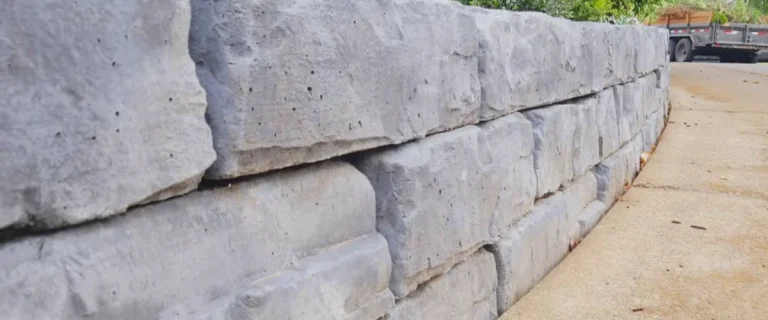
A retaining wall is not just decorative edging. It is an engineered structure designed to hold back soil, manage lateral pressure, and integrate drainage systems that protect your property.
When installed correctly, a retaining wall:
-
- Stabilizes steep slopes
- Prevents erosion during heavy rainfall
- Creates level terraces for patios or lawns
- Improves long-term drainage control
- Expands usable square footage
In Tualatin, where winter rains can saturate soil for extended periods, drainage behind the wall is critical. Without proper base preparation and backfill, even a visually attractive wall can fail.
Our step-by-step retaining wall evaluation and installation process
At White Oak Landscapes, we follow a structured process to ensure retaining walls are built for long-term stability, not short-term appearance.
1. On-site consultation and slope analysis
We begin with a thorough site visit to evaluate grade severity, soil conditions, and water flow patterns.
During this assessment, we:
-
-
- Measure elevation changes across the yard
- Inspect for signs of erosion or soil movement
- Evaluate proximity to foundations and hardscapes
- Review drainage patterns during heavy rainfall
- Discuss your long-term plans for the space
-
This allows us to determine whether regrading alone is feasible or if structural reinforcement is required.
2. Structural design and detailed proposal
If a retaining wall is necessary, we develop a plan tailored to your property.
Your proposal outlines:
-
-
- Wall height, length, and material selection
- Drainage system design including perforated pipe and gravel backfill
- Base depth and compaction requirements
- Integration with patios, walkways, or lawn areas
- Estimated timeline and investment range
-
We also reference our Landscape Pricing Guide and Hardscape Pricing Guide so you understand how wall size, material choice, and site complexity affect cost.
3. Excavation, base preparation, and wall construction
Installation begins with excavation to proper depth below grade. This phase determines the long-term success of the wall.
During construction, we:
-
-
- Install compacted structural base rock
- Set the first course precisely level
- Install drainage aggregate and perforated drain pipe
- Backfill and compact soil in controlled lifts
- Ensure alignment and structural integrity at every course
-
Skipping proper base preparation or drainage is one of the most common causes of retaining wall failure. This is not a DIY project.
4. Final grading and integration with surrounding landscape
Once the wall is complete, we reshape the surrounding yard to create usable, stable areas.
-
-
- Finish grading behind and below the wall
- Preparing surfaces for patios or lawn installation
- Connecting drainage systems to safe discharge points
- Optional landscape lighting integration
-
We conduct a final walkthrough so you understand how the structure functions and what to monitor over time.
Warning signs your Tualatin backyard needs a retaining wall
Not every slope requires a wall, but certain conditions strongly suggest structural support is needed.
Watch for:
-
- More than three to four feet of elevation change within a short span
- Soil sliding or bare patches after storms
- Foundation exposure due to erosion
- Pooling water at the bottom of the slope
- Plans for hardscape features that require stable ground
If these issues are present, regrading alone may only delay a larger problem.
Combining retaining walls with broader backyard improvements
Retaining walls often serve as the foundation for a complete backyard upgrade. Once the slope is stabilized, you can create:
-
- Level patio areas for outdoor dining
- Terraced garden beds
- Safe lawn areas for play
- Seating walls integrated into the design
- Improved pathways and access points
Because we provide full-service landscaping and hardscape installation, your retaining wall becomes part of a cohesive plan rather than an isolated structure.
How long does a retaining wall project take?
Most residential retaining wall projects take several days to a few weeks depending on height, length, and access. Multi-tiered walls or integrated patio projects may require additional time.
We schedule work carefully around Oregon’s seasonal weather to ensure soil conditions remain suitable for proper compaction.
Caring for your retaining wall
Once installed, a properly built retaining wall requires minimal maintenance. However, periodic inspection is important.
We recommend:
-
- Keeping drainage outlets clear of debris
- Monitoring irrigation to avoid oversaturation
- Checking for unusual settling after heavy storms
- Scheduling inspections for taller structural walls
Our landscape maintenance services help protect surrounding plantings and hardscapes so your entire yard remains stable.
Proudly serving Tualatin and surrounding communities
White Oak Landscapes provides expert retaining wall construction, drainage correction, and full-service landscaping in:
-
- Tualatin
- Oregon City
- West Linn
- Lake Oswego
- Happy Valley
- Milwaukie
- Damascus
- Clackamas
- Canby
- Beavercreek
We understand the grading and drainage challenges common throughout the Tualatin area and build retaining walls designed for long-term structural performance.
Ready to stabilize your sloped backyard?
Protect your property and create usable space with a professionally engineered retaining wall.
If you are unsure whether regrading is enough for your Tualatin backyard, contact White Oak Landscapes today. We will evaluate your slope, explain your options clearly, and design a solution built for durability.
Request your estimate now and take the first step toward a safer, more functional yard.